Sailors have high anxiety when booking dining reservations in Virgin Voyages. Popular times fill quickly, and sailors feel pressure to act fast. The AI Chatbot was introduced to simplify booking, but the initial prototype risked adding cognitive load instead of reducing it.
I was brought in to audit the experience and redesign key flows to confidently support beta launch.


MVP Audit Findings
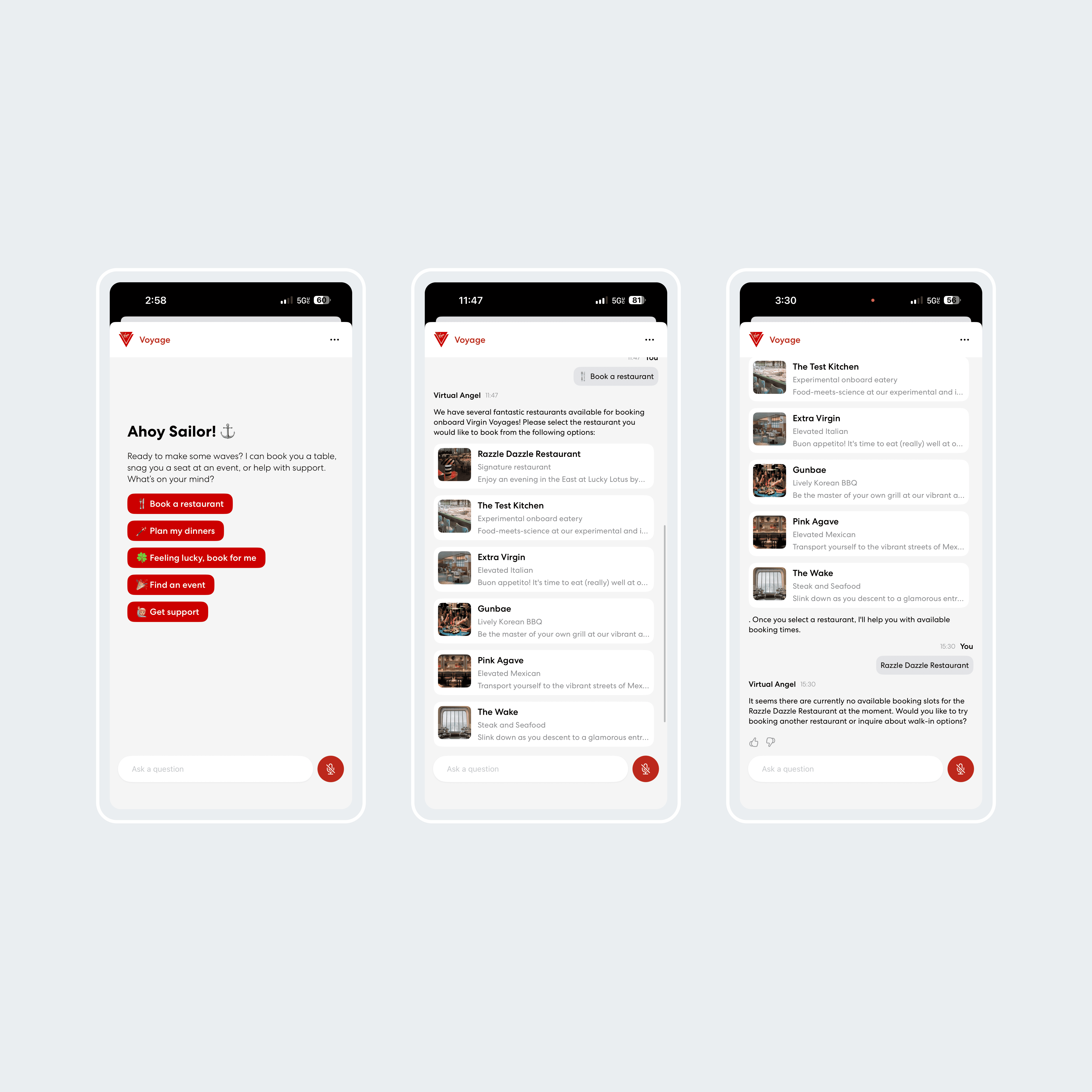
The initial prototype was functional but structurally misaligned with booking logic and LLM behavior, leading to frequent zero-availability results during audit testing.
Key Gaps Identified
Critical inputs (date, party size) were never collected
Availability was resolved after venue selection, creating avoidable dead ends
Conversational shortcuts lacked progressive structure for LLM clarity
Recovery paths were reactive rather than proactive
Interaction patterns were inconsistent with app's design system
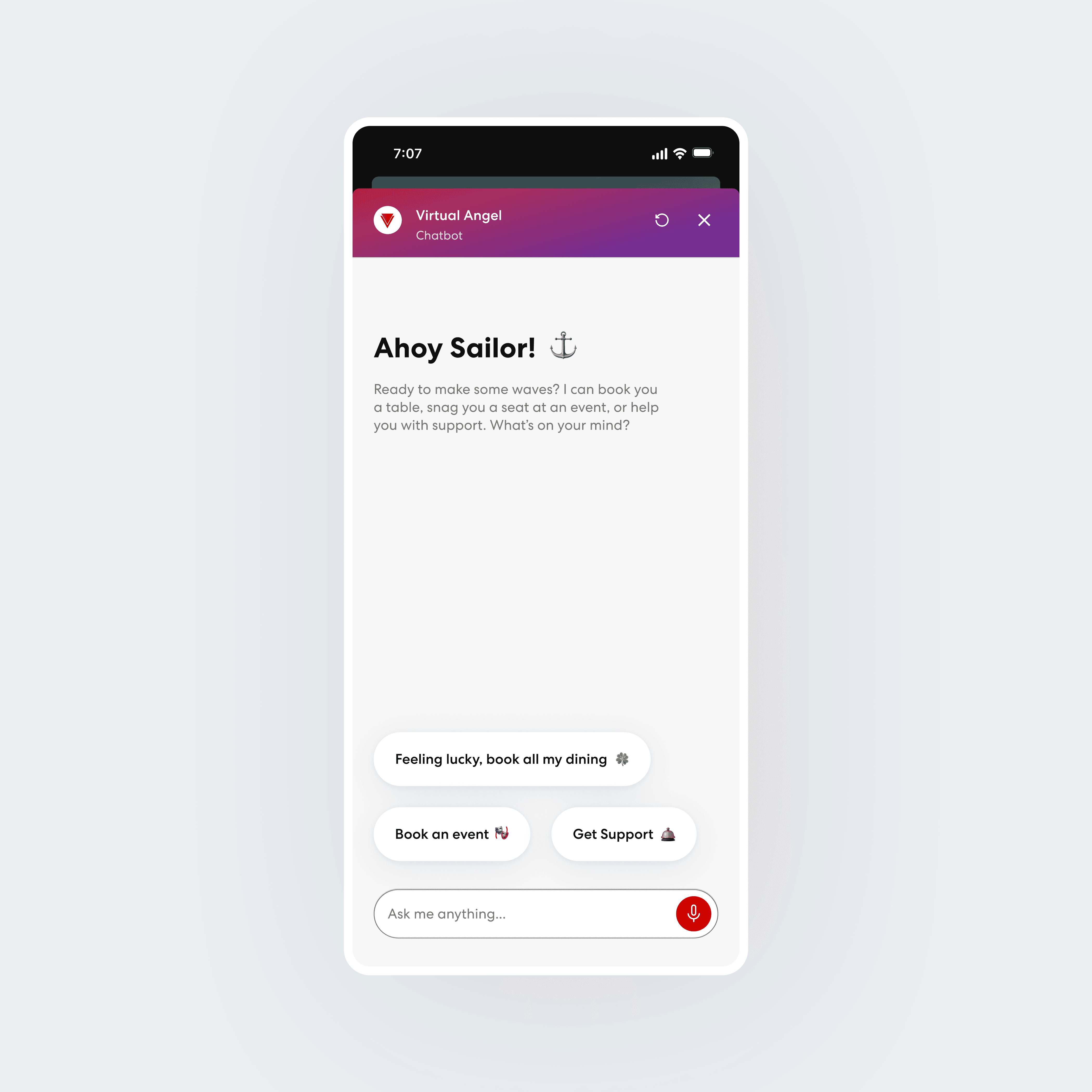
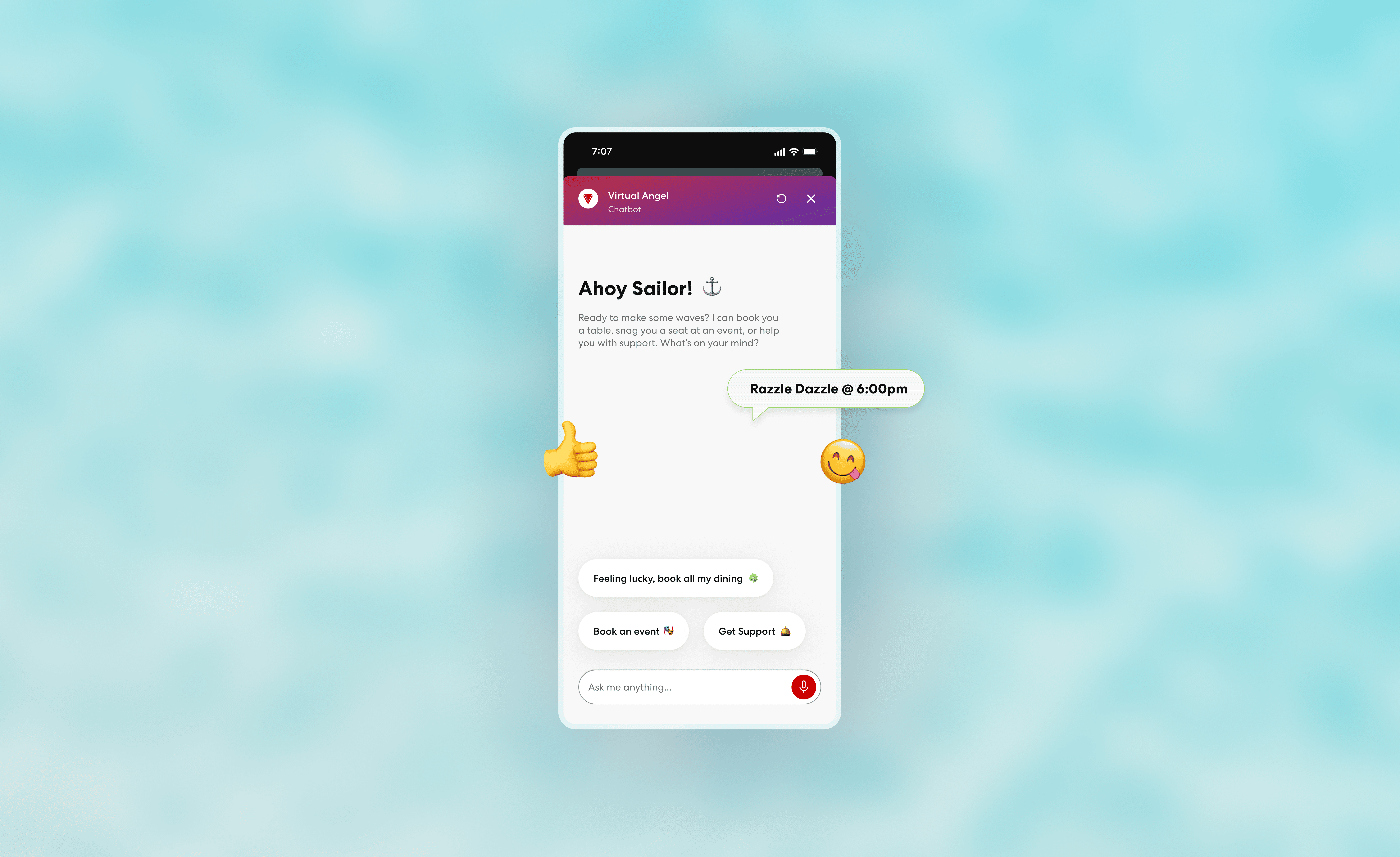
Entry screen
Consolidated shortcuts into clear, intent-based entry points to reduce decision friction.
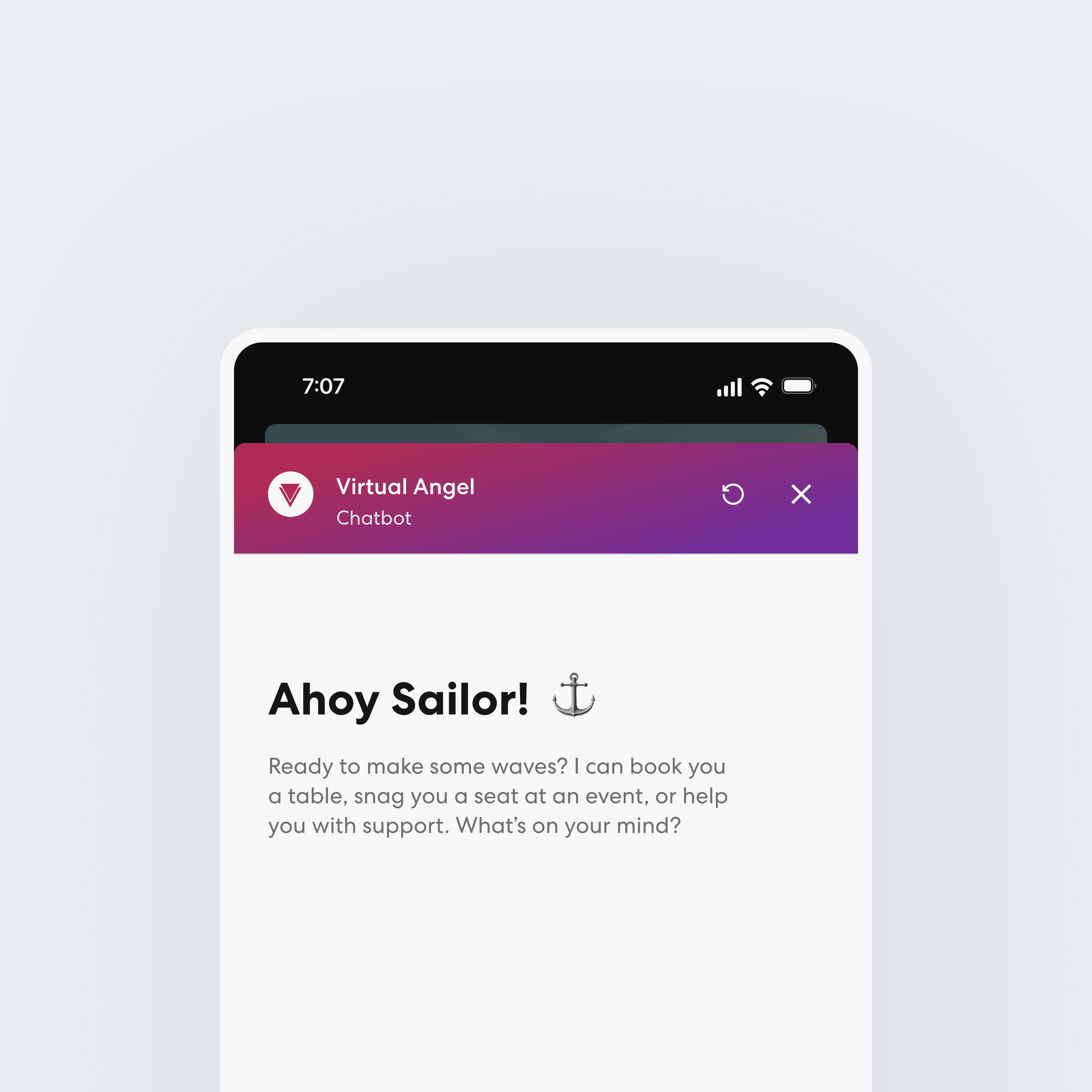
Header
Improved hierarchy, simplified reset from three steps to one, and added a clear close control.
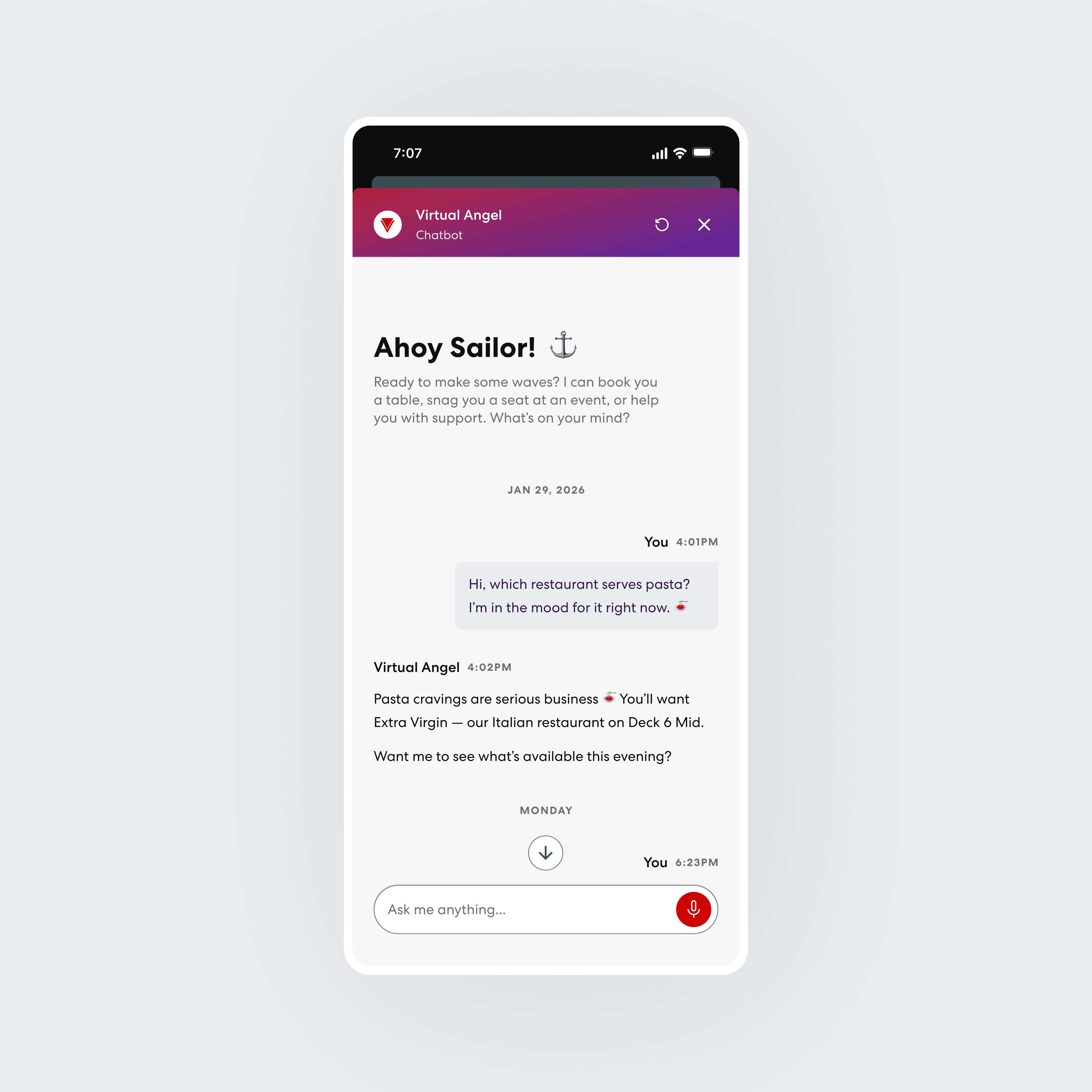
Conversation Context & Navigation
Improved conversation clarity with day labels and quick navigation to latest messages.
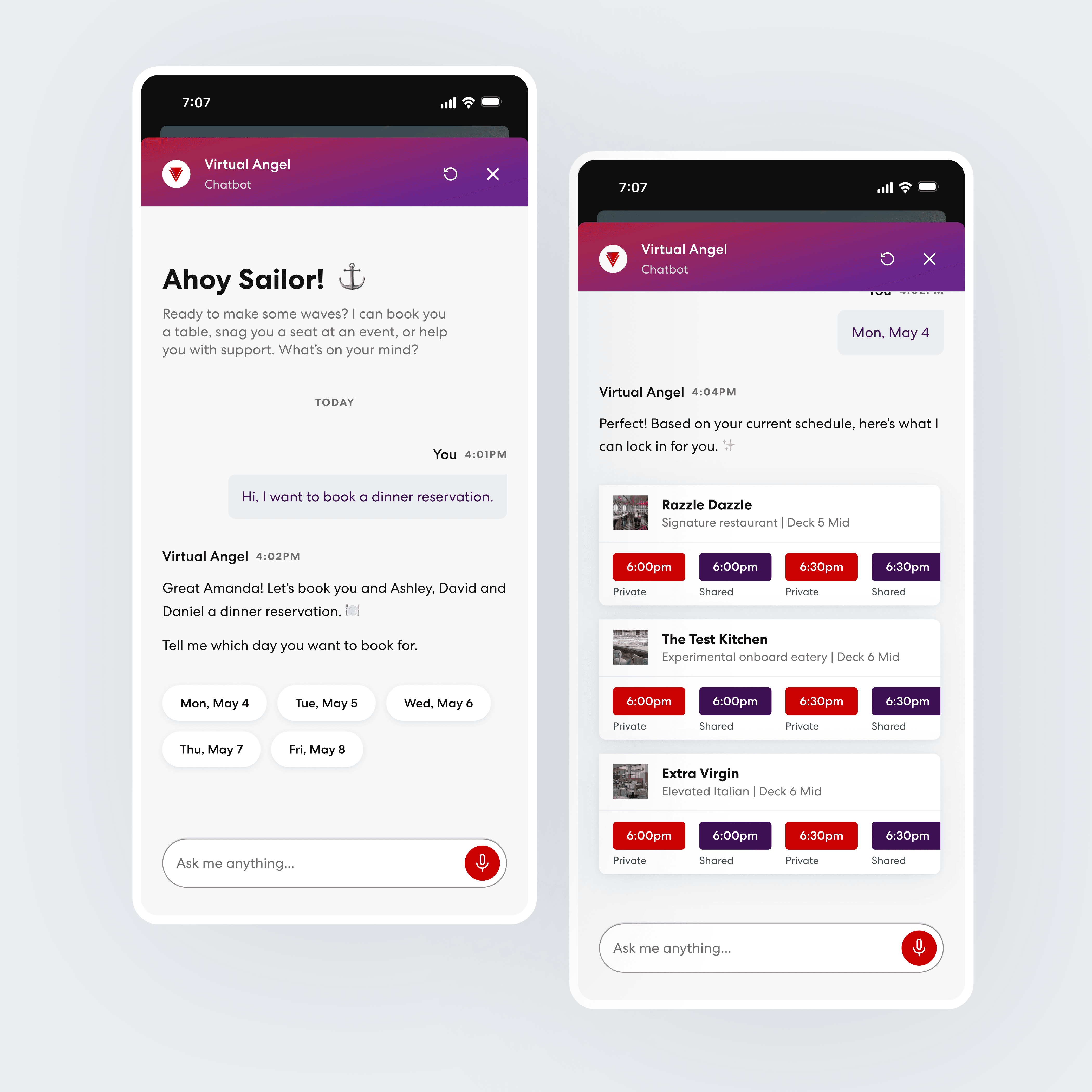
Action Items
Structured booking responses to support faster decision-making.
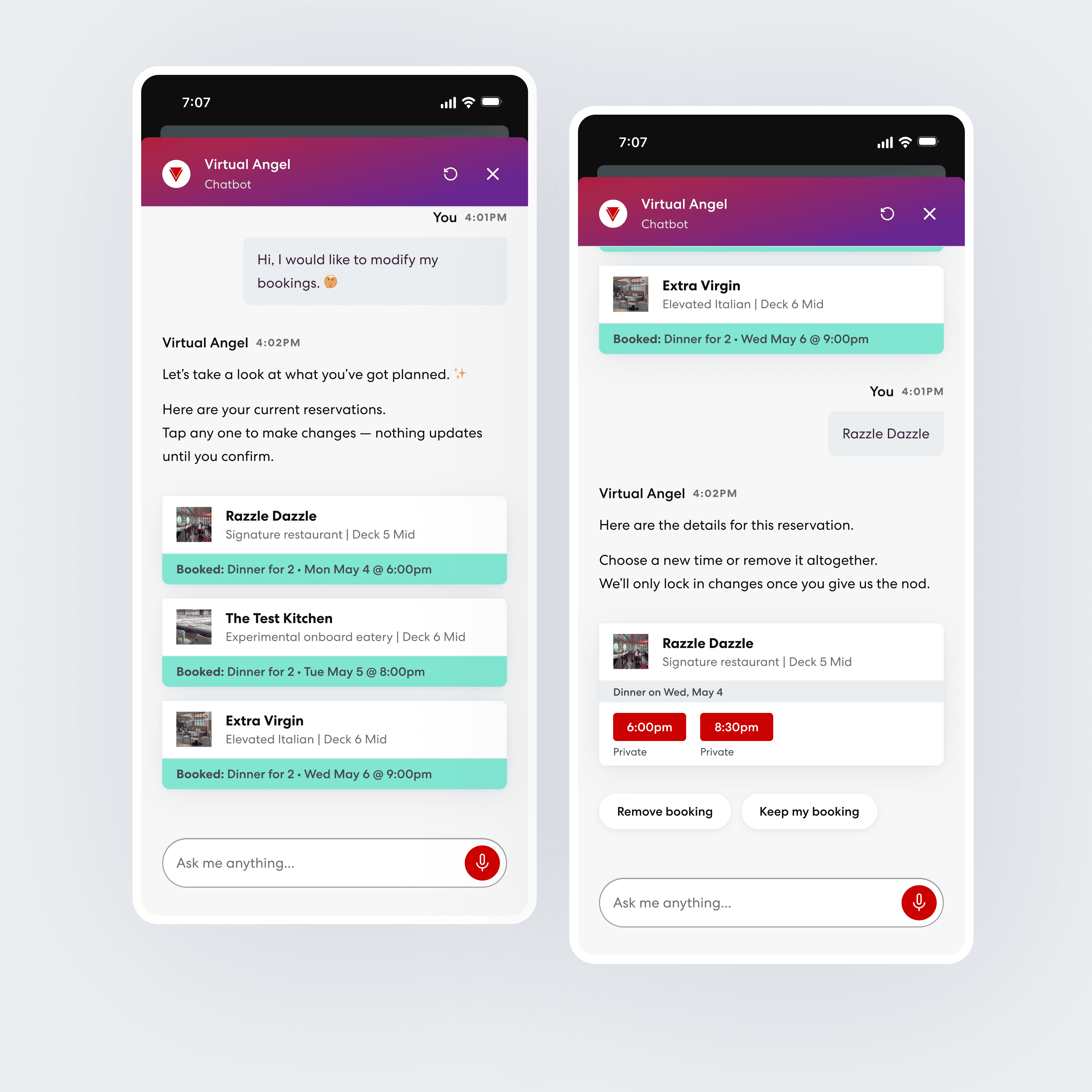
Modify Booking
Enabled conversational editing to reduce task restart friction.
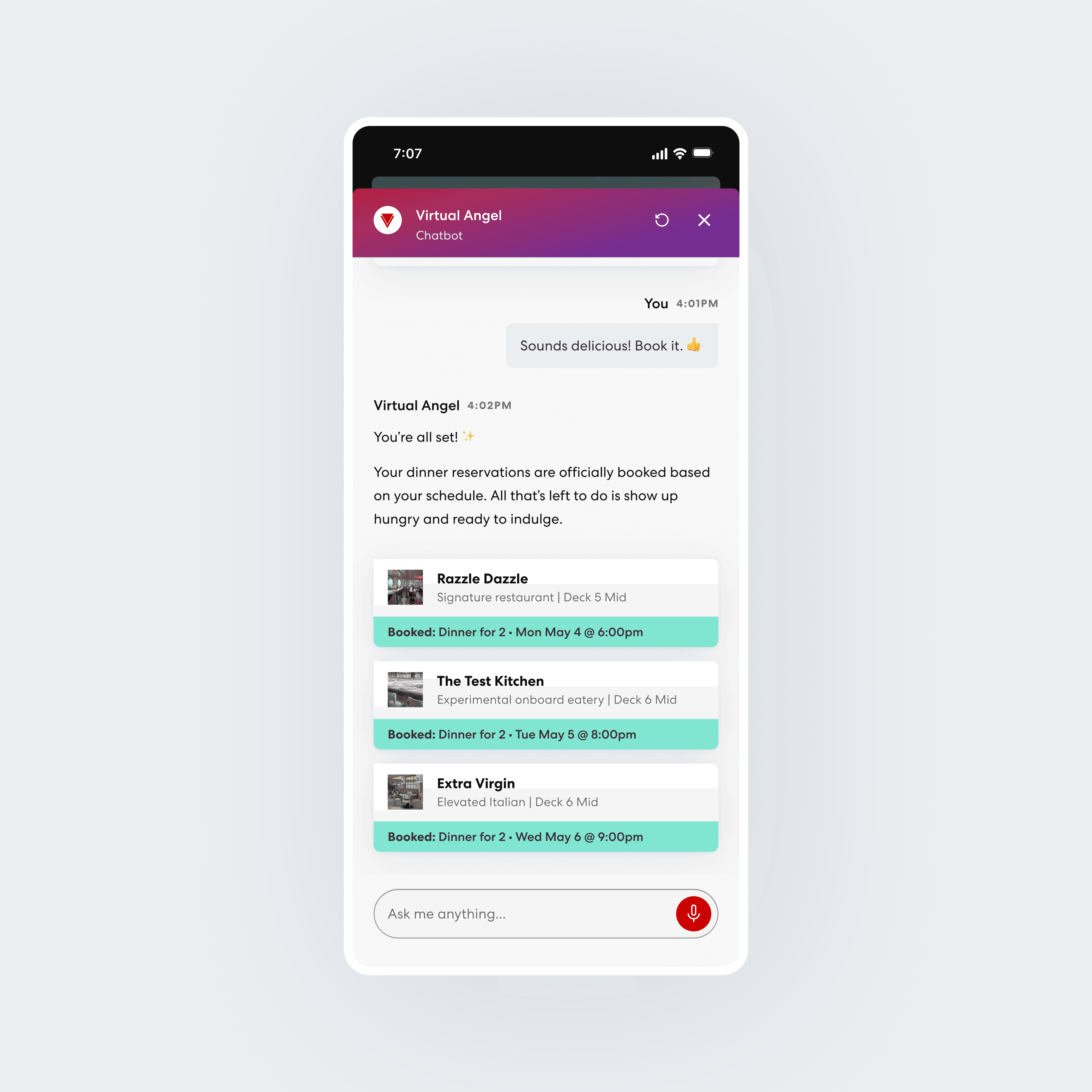
Sucess State
Clear confirmation patterns to reinforce booking confidence.
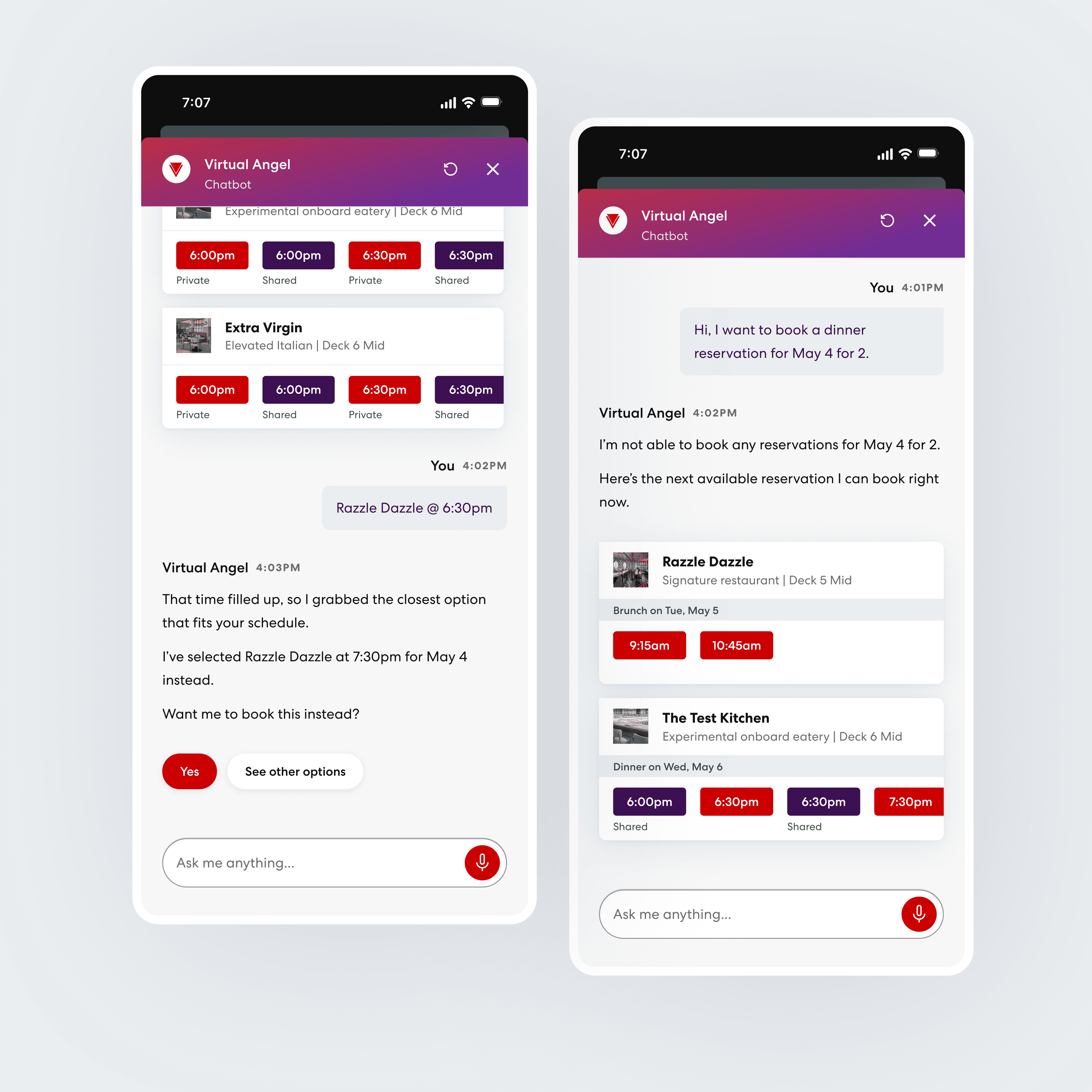
Conflict Recovery & Next-Best Guidance
If a selected time is unavailable, the system offers the closest alternatives without restarting the booking process.
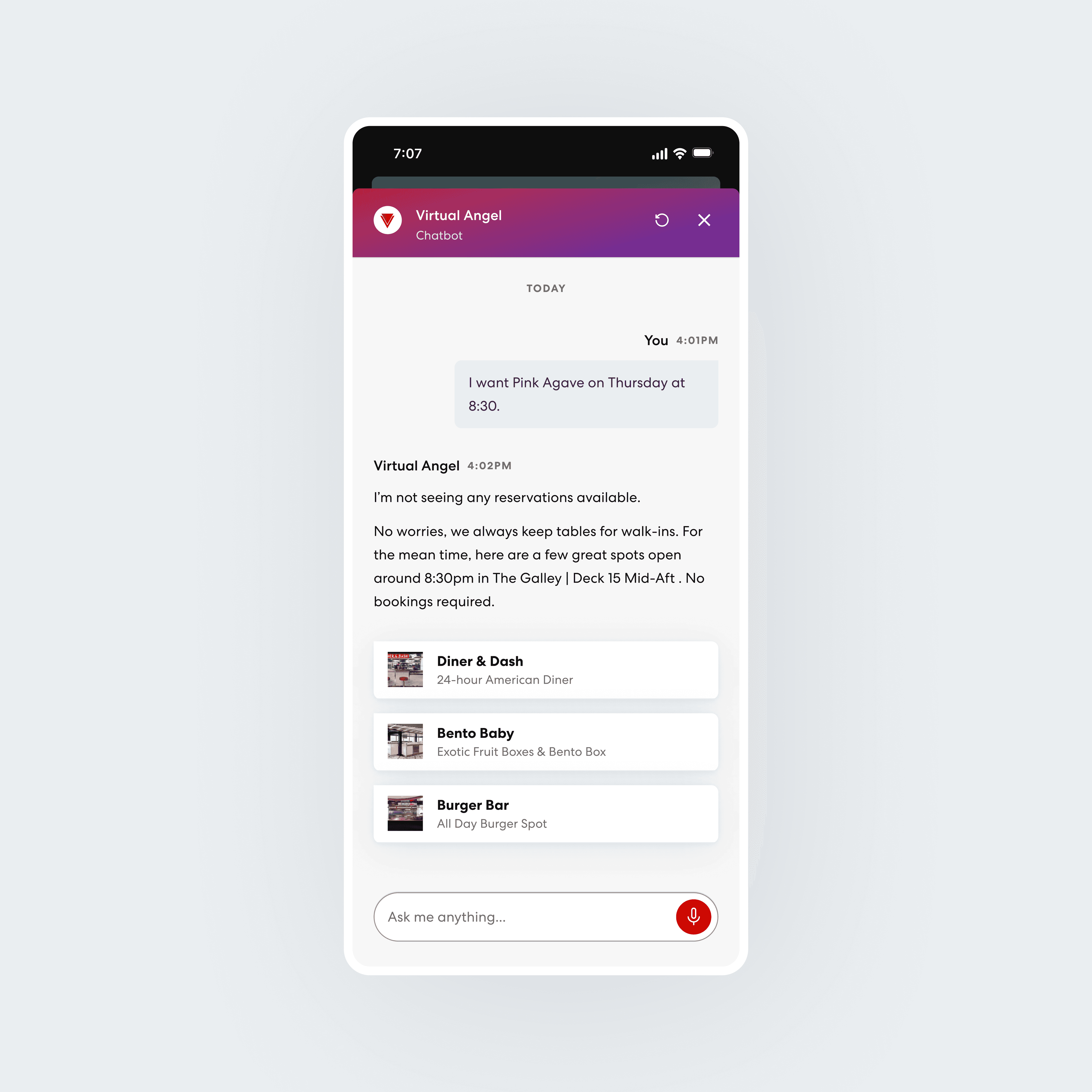
Availability Failure (Soft Landing)
When no reservations are available, the chatbot suggests walk-ins or alternative venues instead of ending the flow.